.png)
What Is Irritable Bowel Syndrome? Common Causes and Symptoms
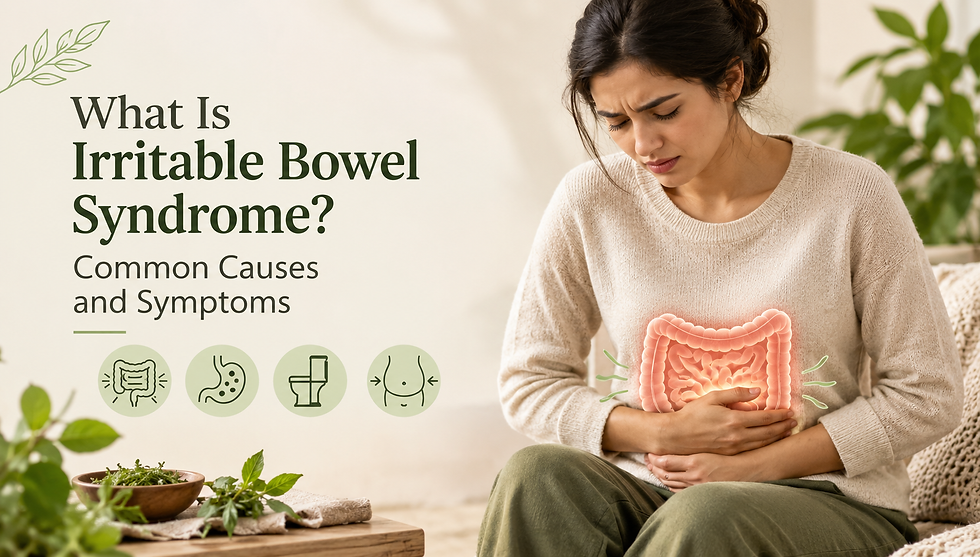
Irritable Bowel Syndrome, commonly known as IBS, is a common digestive condition that can affect bowel habits and cause recurring abdominal symptoms. Symptoms may vary from person to person and can include constipation, diarrhea, bloating, and abdominal pain.
Understanding IBS, its common symptoms, possible triggers, and everyday considerations can help people become more aware of their digestive health.
What Is Irritable Bowel Syndrome?
Irritable Bowel Syndrome is a digestive condition commonly associated with recurring abdominal pain and changes in bowel habits. Some individuals may experience constipation more often, while others may experience diarrhea or a combination of both. Bloating and changes in bowel patterns may also occur (1).
The exact mechanisms involved in IBS are not fully understood, and symptoms can vary from person to person.
What Are the Common Symptoms of IBS?
IBS symptoms can vary in frequency and intensity. Common symptoms may include:
Abdominal pain or discomfort
Bloating
Changes in bowel habits
Constipation
Diarrhea
A feeling of incomplete bowel movement
Not everyone experiences the same symptoms. Some people may notice that certain foods, eating patterns, stress, or other lifestyle factors are associated with changes in their symptoms.
What Are the Common Causes or Triggers of IBS?
The exact causes and mechanisms involved in IBS are not fully understood. Several factors may be associated with IBS symptoms, and these can differ between individuals.
Food and Dietary Patterns
Certain foods or eating patterns may be associated with digestive discomfort in some people. Keeping track of meals and symptoms can help identify individual patterns.
Stress and Emotional Factors
Stress and emotional changes may influence digestive symptoms in some individuals. Maintaining a regular routine and using healthy stress-management practices may support overall wellbeing.
Changes in Gut Function
IBS may involve changes in how the digestive system functions. Communication between the gut and brain may also play a role in how symptoms develop and are experienced.
Individual Triggers
Triggers are not the same for everyone. Food choices, eating habits, sleep patterns, stress, and other lifestyle factors may be associated with symptoms in some individuals.
What Are the Different Types of IBS?
IBS can be described according to the predominant pattern of bowel movements.
IBS With Constipation
IBS with constipation (IBS-C) is characterised by constipation being the predominant bowel pattern (2).
IBS With Diarrhea
IBS with diarrhea (IBS-D) is characterised by diarrhea being the predominant bowel pattern (3).
IBS With Mixed Bowel Habits
IBS with mixed bowel habits (IBS-M) involves both constipation and diarrhea occurring at different times.
These categories help describe symptom patterns, but individual experiences can still vary.
IBS and Everyday Lifestyle
Digestive wellness can also be influenced by everyday habits. Maintaining a consistent routine may be helpful for overall wellbeing.
Some lifestyle considerations include:
Regular Physical Activity
Regular movement can form part of a healthy lifestyle and may support general digestive wellbeing.
Adequate Sleep
Maintaining a consistent sleep routine is an important part of overall health and wellbeing.
Stress Management
Relaxation practices, breathing exercises, meditation, or other suitable stress-management activities may help support overall wellbeing.
Consistent Eating Routine
Following a regular eating schedule can make it easier to observe how different foods and meal patterns relate to individual digestive symptoms.
Food and Eating Habits to Consider With IBS
There is no single eating pattern that works for everyone with IBS. Individual food tolerance can vary, so paying attention to personal symptoms and dietary patterns can be useful.
Some general considerations include:
Maintain regular meal timings where practical.
Eat slowly and pay attention to portion sizes.
Keep a food and symptom diary when useful.
Pay attention to foods that appear to be associated with changes in digestive symptoms.
Maintain adequate fluid intake.
Discuss significant dietary changes with a qualified healthcare professional or dietitian.
Ayurvedic supplements may also be considered as part of a general wellness routine, with professional guidance when appropriate.
Life Aveda offers Ayurveda-inspired supplements, including Triphala-based formulations, that may be considered as part of a wellness routine. For more information about food choices, you can also explore our guide on what to eat and what not to eat with IBS.
Consult a qualified healthcare professional before using supplements, especially if you have ongoing digestive symptoms or take medications.
When Should You Talk to a Healthcare Professional?
Digestive symptoms can have different causes. It is important to seek professional medical advice if symptoms are persistent, worsening, or significantly affecting everyday life.
Medical evaluation is especially important when there are unusual symptoms such as unexplained weight loss, blood in the stool, or other concerning changes.
A healthcare professional can assess the symptoms and determine whether further evaluation is appropriate.
IBS: Key Points to Remember
IBS is associated with recurring abdominal pain and changes in bowel habits.
Symptoms can differ from one person to another.
Common symptoms include abdominal pain, bloating, constipation, and diarrhea.
Possible triggers may include dietary patterns, stress, and individual lifestyle factors.
Keeping track of symptoms and food patterns may help identify personal triggers.
Persistent or concerning symptoms should be discussed with a healthcare professional.
Disclaimer
This article is intended for general educational and wellness information only. It is not a substitute for medical diagnosis, treatment, or professional healthcare advice. If you have persistent or concerning digestive symptoms, consult a qualified healthcare professional.
Reference
Saha, L. (2014). Irritable bowel syndrome: Pathogenesis, diagnosis, treatment, and evidence-based medicine. World Journal of Gastroenterology, 20(22), 6759–6773. https://doi.org/10.3748/wjg.v20.i22.6759
Di Rosa, C., Altomare, A., Terrigno, V., Carbone, F., Tack, J., Cicala, M., & Guarino, M. (2023). Constipation-predominant irritable bowel syndrome (IBS-C): Effects of different nutritional patterns on intestinal dysbiosis and symptoms. Nutrients, 15(7), 1647. https://doi.org/10.3390/nu15071647
Altomare, A., Di Rosa, C., Imperia, E., Emerenziani, S., Cicala, M., & Guarino, M. P. L. (2021). Diarrhea predominant-irritable bowel syndrome (IBS-D): Effects of different nutritional patterns on intestinal dysbiosis and symptoms. Nutrients, 13(5), 1506. https://doi.org/10.3390/nu13051506
Frequently Asked Questions
What is Irritable Bowel Syndrome?
Irritable Bowel Syndrome, or IBS, is a digestive condition commonly associated with recurring abdominal discomfort and changes in bowel habits.
What are the common symptoms of IBS?
Common symptoms may include abdominal discomfort, bloating, constipation, diarrhea, and changes in bowel habits.
What factors may trigger IBS symptoms?
Possible triggers vary between individuals. Dietary patterns, stress, eating habits, sleep, and other lifestyle factors may be associated with changes in symptoms.
Are there different types of IBS?
Yes. IBS is commonly described as IBS with constipation (IBS-C), IBS with diarrhea (IBS-D), and IBS with mixed bowel habits (IBS-M).
Should I change my diet if I have IBS?
Dietary needs can differ from person to person. Keeping a food and symptom diary and discussing significant dietary changes with a qualified healthcare professional or dietitian can be helpful.
When should I consult a healthcare professional?
You should consider professional medical advice when digestive symptoms are persistent, worsening, severe, or accompanied by concerning signs such as unexplained weight loss or blood in the stool.



Comments