.png)
Shatavari Benefits: Traditional Ayurvedic Herb for Women's Wellness
Updated: Jul 15
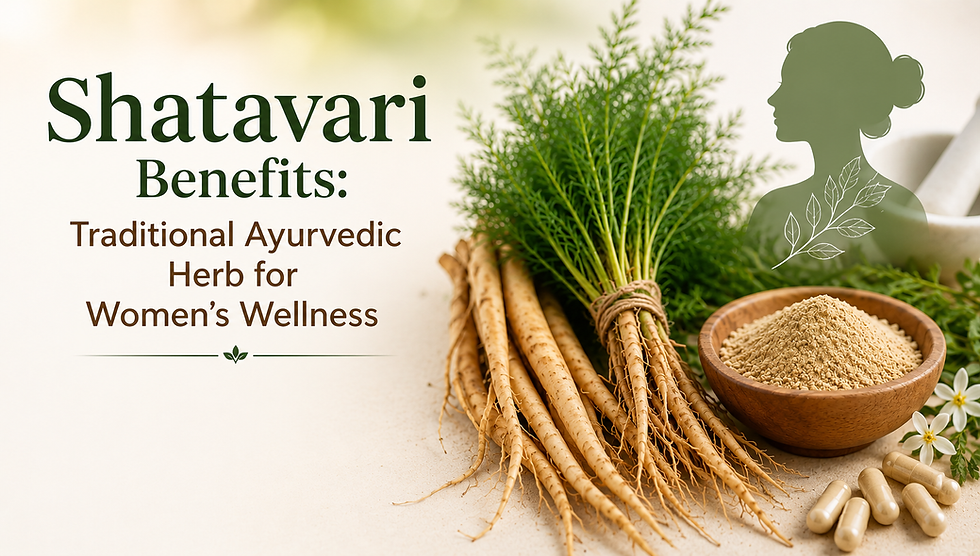
For centuries, Ayurveda has valued Shatavari (Asparagus racemosus) as one of its most respected herbs for supporting women's wellness and overall vitality. Often referred to as the "Queen of Herbs," it has traditionally been used to promote hormonal balance, reproductive health, healthy digestion, immunity, and emotional well-being.
Rich in naturally occurring compounds such as saponins, flavonoids, and antioxidants, Shatavari is also known for its adaptogenic properties, which may help the body adapt to everyday stress. While modern research continues to explore its potential health benefits, Shatavari remains a trusted herb in Ayurvedic wellness practices.
In this guide, you'll discover Shatavari's traditional benefits, Ayurvedic significance, recommended uses, dosage, possible side effects, and tips for choosing a quality supplement.
What Is Shatavari?
Shatavari (Asparagus racemosus) is a traditional Ayurvedic herb known for supporting women's wellness, hormonal balance, reproductive health, digestion, stress management, and overall vitality. It contains naturally occurring antioxidants and adaptogenic compounds and has been used in Ayurveda for centuries as part of a healthy lifestyle.
Botanical Profile
Feature | Details |
Botanical Name | Asparagus racemosus |
Family | Asparagaceae |
Common Names | Shatavari, Satavar, Wild Asparagus |
Plant Part Used | Root |
Native Region | India and parts of Asia |
Available Forms | Powder, Capsules, Tablets, Liquid Extract |
Why Is Shatavari Important in Ayurveda?
In Ayurveda, Shatavari is valued as a nourishing Rasayana herb that traditionally supports women's wellness, healthy digestion, emotional balance, and overall vitality. It is believed to help balance Pitta and Vata doshas due to its cooling and rejuvenating properties.
Modern research has also identified naturally occurring compounds such as steroidal saponins, polyphenols, and antioxidants that may contribute to its adaptogenic and antioxidant properties. While more clinical research is needed, Shatavari remains one of Ayurveda's most respected herbs for holistic wellness.
Top Shatavari Benefits for Women's Wellness
Shatavari is a well-known Ayurvedic herb traditionally used to support women's health and overall well-being. Here are some of its key benefits:
1. Supports Hormonal Balance
Shatavari is traditionally used to help maintain hormonal balance during different stages of a woman's life. It may support overall reproductive wellness as part of a healthy lifestyle.
Key highlights:
Supports hormonal wellness
Helps maintain natural balance
Traditionally used in Ayurveda
2. Promotes Female Reproductive Health
Ayurveda recognizes Shatavari as a nourishing herb for the female reproductive system. It has been traditionally used to support reproductive health and vitality.
Key highlights:
Supports reproductive wellness
Nourishes the reproductive system
Traditionally valued in Ayurveda
3. May Support Menopause Wellness
Shatavari's cooling and rejuvenating properties have traditionally been used to promote comfort and overall well-being during menopause.
Key highlights:
Supports women during menopause
Traditionally known for its cooling nature
Helps promote overall wellness
4. Supports Breastfeeding Mothers
In Ayurvedic tradition, Shatavari has been used as a nourishing herb for new mothers. Some studies have explored its potential role in supporting lactation, though more research is needed.
Key highlights:
Traditionally used after childbirth
Supports maternal wellness
Consult a healthcare professional before use
5. Helps Manage Everyday Stress
As a Rasayana herb, Shatavari is traditionally believed to help the body adapt to everyday stress while supporting emotional well-being.
Key highlights:
Supports stress management
Promotes emotional balance
Encourages overall vitality
6. Supports Healthy Digestion
Shatavari is traditionally used to soothe the digestive system and promote healthy digestion, contributing to overall wellness.
Key highlights:
Supports digestive comfort
Helps maintain digestive balance
Promotes better nutrient absorption
7. Provides Antioxidant Support
Shatavari contains naturally occurring antioxidants that help protect cells from oxidative stress and support the body's natural defense system.
Key highlights:
Rich in antioxidants
Helps combat oxidative stress
Supports overall wellness
8. Promotes Overall Vitality
Ayurveda values Shatavari as a rejuvenating herb that supports long-term vitality and holistic well-being when combined with a healthy lifestyle.
Key highlights:
Supports daily wellness
Promotes long-term vitality
Complements a balanced lifestyle
Shatavari vs Ashwagandha: What's the Difference?
Feature | Shatavari | Ashwagandha |
Botanical Name | Asparagus racemosus | Withania somnifera |
Primary Traditional Use | Women's wellness and reproductive health | Stress management, energy, and overall vitality |
Ayurvedic Classification | Rasayana (Rejuvenating Herb) | Rasayana (Rejuvenating Herb) |
Best Known For | Hormonal balance, menopause support, digestion | Adaptogenic support, stress resilience, physical performance |
Cooling or Warming Nature | Cooling | Warming |
Supports Stress Management | Yes, traditionally used to promote emotional well-being | Yes, traditionally used to help the body adapt to stress |
Supports Women's Health | Primary traditional use | May support overall wellness but not specifically women's health |
Supports Digestive Health | Traditionally used to promote healthy digestion | May support digestive wellness indirectly through stress management |
Suitable For | Women seeking hormonal and reproductive wellness support | Men and women looking for stress and energy support |
Shatavari in Ayurveda: Why It Is Known as a Women's Wellness Herb
Ayurveda has used Shatavari (Asparagus racemosus) for centuries as a Rasayana, a category of rejuvenating herbs believed to nourish the body's tissues, promote vitality, and support long-term wellness. While Shatavari is widely recognized for its role in women's health, Ayurvedic practitioners also value it for supporting digestion, emotional well-being, and overall balance.
According to Ayurvedic principles, Shatavari has a naturally cooling nature that helps balance Pitta and Vata doshas. It is traditionally recommended to support the body's natural resilience during different stages of life, including menstruation, postpartum recovery, and menopause.
Ayurvedic Properties of Shatavari
Ayurvedic Property | Description |
Rasa (Taste) | Sweet (Madhura) and Bitter (Tikta) |
Guna (Qualities) | Heavy (Guru), Unctuous (Snigdha) |
Virya (Potency) | Cooling (Shita) |
Vipaka (Post-Digestive Effect) | Sweet (Madhura) |
Dosha Balance | Traditionally helps balance Vata and Pitta |
These traditional properties form the basis of Shatavari's long-standing use in Ayurvedic wellness practices.
How to Take Shatavari
Shatavari is available in several convenient forms, allowing individuals to choose the option that best fits their lifestyle. The right choice depends on personal preference, product quality, and guidance from a qualified healthcare professional.
Form | How It Is Commonly Used |
Powder (Churna) | Traditionally mixed with warm milk or water. |
Capsules | Convenient for daily supplementation. |
Tablets | Easy to consume with water. |
Liquid Extract | Used according to the product's directions. |
Many people prefer capsules because they are easy to include in a daily wellness routine, while others choose the traditional powder form commonly used in Ayurveda.
What Is the Recommended Dosage of Shatavari?
There is no single dosage that is suitable for everyone. The appropriate amount depends on factors such as:
Age
Overall health
Individual wellness goals
Product formulation
Guidance from a qualified healthcare professional
Always follow the dosage instructions provided on the product label or those recommended by your healthcare provider. Taking more than the recommended amount does not necessarily provide additional benefits.
If you are pregnant, breastfeeding, taking prescription medications, or managing a medical condition, consult a healthcare professional before adding Shatavari or any herbal supplement to your routine.
Who Can Benefit from Shatavari?
Shatavari has traditionally been used by people seeking natural support for overall wellness. Depending on individual needs and professional guidance, it may be suitable for:
Women looking to support hormonal balance.
Adults interested in maintaining reproductive wellness.
Women during menopause seeking Ayurvedic wellness support.
Individuals looking to support digestive health.
People aim to manage everyday stress as part of a healthy lifestyle.
Those interested in incorporating traditional Ayurvedic herbs into their daily routine.
While Shatavari is most commonly associated with women's wellness, it is also used in Ayurveda as a general rejuvenating herb for overall vitality. As with any supplement, it should be used thoughtfully and as part of a balanced lifestyle.
Choosing a Quality Shatavari Supplement
The effectiveness of any herbal supplement depends not only on the herb itself but also on its quality, purity, and manufacturing standards. When selecting a Shatavari supplement, it's important to choose products from trusted Ayurvedic brands that prioritize authentic ingredients and quality assurance.
Here are a few factors to consider before buying a Shatavari supplement:
Look for high-quality, authentic Shatavari root extracts or powders.
Choose products made in GMP-certified manufacturing facilities.
Read the ingredient list carefully to avoid unnecessary additives or fillers.
Select brands that provide transparent labeling and dosage information.
Follow the recommended usage instructions and consult a healthcare professional if needed.
At Life Aveda, we believe that Ayurveda works best when traditional wisdom is combined with quality-focused manufacturing. Our herbal wellness products are carefully formulated to support your daily wellness journey while maintaining the authenticity of Ayurvedic principles.
Note: Herbal supplements are intended to support general wellness and should not replace professional medical advice, diagnosis, or treatment.
Final Thoughts
Shatavari has been valued in Ayurveda for centuries as a natural herb that supports women's wellness, hormonal balance, reproductive health, and overall vitality. When combined with a healthy lifestyle, it can be a beneficial addition to your daily wellness routine. To experience its traditional benefits, choose high-quality Ayurvedic supplements from trusted brands like Life Aveda and always follow the recommended usage instructions or consult a healthcare professional if needed.
Frequently Asked Questions (FAQs)
1. What is Shatavari mainly used for?
Shatavari is traditionally used in Ayurveda to support women's wellness, hormonal balance, reproductive health, digestion, and overall vitality. It is also valued as a rejuvenating herb that promotes general well-being.
2. Is Shatavari only beneficial for women?
No. Although Shatavari is best known for supporting women's health, Ayurveda also considers it a nourishing herb for men. It has traditionally been used to support digestion, immunity, stress management, and overall wellness.
3. Can I take Shatavari every day?
Many people include Shatavari as part of their daily wellness routine. However, the appropriate dosage depends on your health condition, the product being used, and guidance from a qualified healthcare professional.
4. What is the best time to take Shatavari?
The best time depends on the product formulation and your healthcare provider's recommendations. Always follow the instructions provided on the product label.
5. Are there any side effects of Shatavari?
Shatavari is generally well tolerated when used as directed. Some individuals may experience mild digestive discomfort or allergic reactions. If you have any medical conditions or take prescription medications, consult your healthcare provider before use.
6. Can Shatavari help during menopause?
In Ayurveda, Shatavari has traditionally been used to support women during menopause because of its nourishing and cooling properties. However, experiences vary, and it should be used under professional guidance.
7. Can pregnant or breastfeeding women take Shatavari?
Pregnant or breastfeeding women should always consult their healthcare provider before taking Shatavari or any herbal supplement.
References
To ensure accuracy and support evidence-based wellness information, consider referencing reputable sources such as:
National Center for Complementary and Integrative Health (NCCIH)
PubMed – Research studies on Asparagus racemosus
World Health Organization (WHO) – Traditional Medicine resources
The Ayurvedic Pharmacopoeia of India
Ministry of AYUSH, Government of India



Comments